
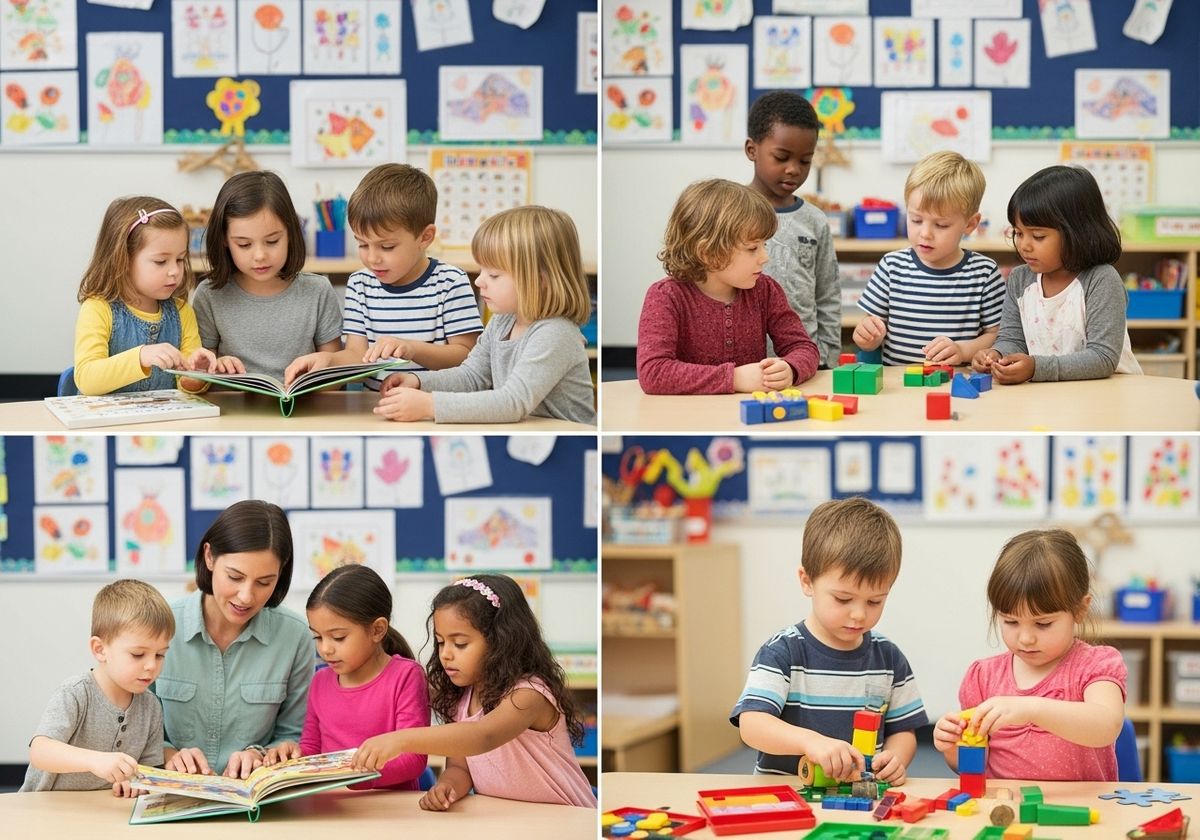
Early childhood development is a critical period that lays the foundation for future academic success. The experiences and interactions children have from birth to age five significantly impact their cognitive, social, and emotional development. By implementing effective strategies during these formative years, parents and educators can help children build the skills and knowledge they need to thrive in school and beyond.

Creating a Nurturing Environment
A nurturing environment is essential for promoting early childhood development. Children need to feel safe, secure, and loved to explore their surroundings and learn new things. Parents and educators can create a nurturing environment by providing consistent routines, offering plenty of positive attention, and responding to children's needs with warmth and sensitivity.

Fostering Language and Literacy Skills
Language and literacy skills are fundamental for academic success. Parents and educators can foster these skills by talking to children frequently, reading aloud, and providing opportunities for them to express themselves verbally. Encouraging children to engage with books and other reading materials can also help them develop a love of reading.

Encouraging Exploration and Discovery
Children learn best through exploration and discovery. Parents and educators can encourage this by providing opportunities for children to play, experiment, and investigate their surroundings. Open-ended activities that allow children to use their imagination and creativity can also be beneficial.

Promoting Social and Emotional Development
Social and emotional development is just as important as cognitive development. Children need to learn how to manage their emotions, build relationships, and resolve conflicts peacefully. Parents and educators can promote social and emotional development by modeling positive behavior, teaching children about emotions, and providing opportunities for them to interact with others.
The Importance of Parental Engagement
Parental engagement plays a crucial role in a child's academic journey. Active parental involvement in early childhood education significantly bridges the achievement gap and fosters a lifelong love for learning. Parents who participate in education seminars and workshops are better equipped to support their children's development.

Addressing the Achievement Gap Through Early Intervention
Targeted early intervention programs focusing on early childhood development can help bridge the achievement gap by providing additional support and resources to children who may be at risk of falling behind. These programs often focus on language development, literacy skills, and social-emotional development, providing a comprehensive approach to early childhood education.
Early childhood development sets the stage for future academic success. By creating nurturing environments, fostering language and literacy skills, encouraging exploration and discovery, and promoting social and emotional development, parents and educators can help children build the skills and knowledge they need to thrive. Remember, Forward Parenting's Citywide Parent Summit 2026 is designed to equip you with the tools and knowledge necessary to support your child's academic journey. Stay tuned for more information on how Forward Parenting is propelling families forward through research, information, and relevant education, and be sure to check out our upcoming education seminars!